


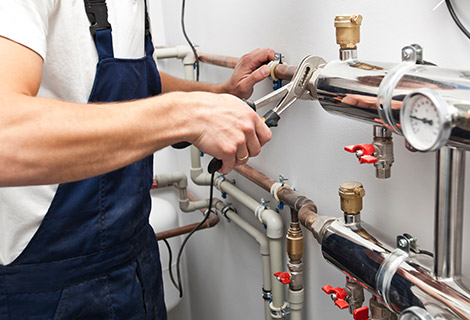




Over time, boiler plants eventually reach a crossroads where planning teams must weigh repair, retrofit, or replacement options. Each path impacts capital budgets, operating costs, and emissions compliance differently. This guide helps facilities teams recognize when systems are past their prime and evaluate the best modernization strategy.
Warning Signs Your Boiler Needs Attention
Most commercial and industrial boilers can run for decades if they’re maintained well, but age alone is not the full story. Planning teams should look at condition, reliability, and performance together rather than relying on a pre-established “retirement age.”
Core Indicators It’s Time to Re-Evaluate
- Escalating repair history: If you are logging repeated tube leaks, refractory failures, burner troubles, or control issues season after season, the system is telling you it is in decline. Frequent outages also disrupt operations and often require premium labor or emergency work.
- Visible deterioration of pressure parts: Inspections that show widespread corrosion, pitting, tube thinning, or shell cracking move you out of “routine maintenance” and into “life safety and major capital risk” territory. Localized wear can sometimes be repaired. Widespread damage is a different conversation.
- Efficiency and fuel use trending the wrong way: If fuel consumption keeps increasing to deliver the same steam or hot water output, you are paying for losses through poor heat transfer, fouling, or obsolete burner technology. At some point, the fuel penalty outweighs the cost of modernization.
- Inconsistent comfort or process performance: Uneven heating, slow warm-up, frequent short-cycling, or difficulty holding setpoints all point to a system that is no longer matched well to the load or is fighting control limitations.
- Compliance and emissions pressure: Tightening NOx and CO rules, new local emissions caps, or mandatory efficiency standards can push older burners and controls out of compliance even if the boiler still runs. In some jurisdictions, new requirements are tied to permit renewals or major modifications.
When several of these factors show up together, it is time to step back from single repairs and look at the whole system.
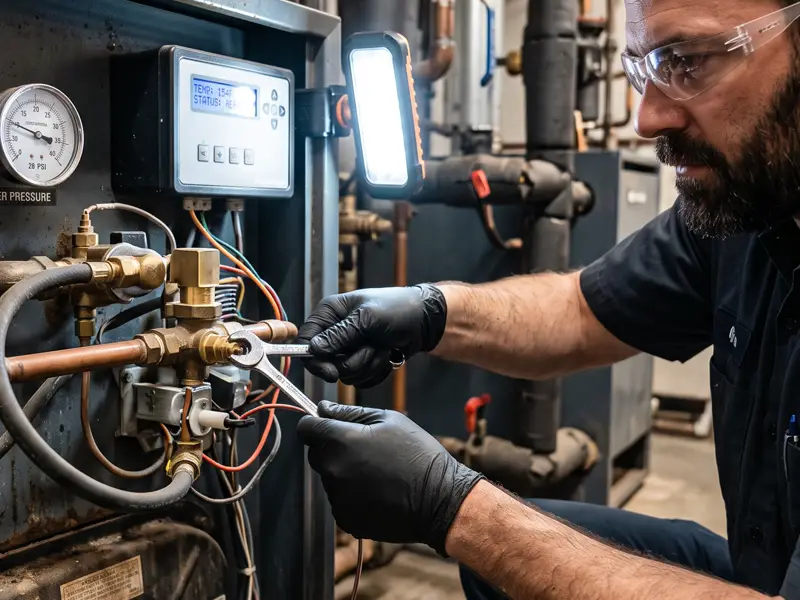 When Targeted Repair Still Makes Sense
Repair is the right tool when the underlying boiler is fundamentally sound, failures are isolated, and you need to control capital spending in the near term.
Repair Works Best When:
- Localized issues show up in inspections (a failed tube panel, a leaking section, a damaged refractory area) but overall shell and tube condition remains sound.
- Well within expected service life and the boiler has a solid maintenance history.
- Clear root causes can be addressed: poor water treatment, a control component failure, or a one-off operating issue.
- No immediate code, safety, or emissions gaps are tied to the pressure vessel or burner design.
In these cases, a focused repair, combined with better water treatment, control calibration, and a stronger maintenance plan, can extend service life.
Questions Planning Teams Should Ask Before Approving Another Repair
- Will this repair address the root cause, or just patch a symptom?
- How many similar failures have we had in the last 3-5 years?
- If we spend these dollars here, does it delay or complicate a future retrofit or replacement?
- What is the projected remaining life of this unit based on current condition?
If the answers point to short-term relief only, it may be time to consider a retrofit instead of “one more” repair.
Retrofit to Modernize an Existing Boiler?
A retrofit keeps the pressure vessel but replaces or upgrades the systems around it: burners, controls, economizers, pumps, and other key components. This approach aims to boost efficiency, tighten emissions, and improve reliability without the cost and disruption of full replacement.
When Retrofit Is a Strong Candidate
- Good pressure-side condition, poor performance: The shell, tubes, and furnace are in good shape, but efficiency is low, emissions are high, or controls are outdated.
- Burner and control obsolescence: You are struggling to source parts for legacy burners or control platforms, or your current combustion system cannot hit new NOx or CO targets without significant tuning work.
- Clear efficiency upside: Adding a modern low-NOx burner, O₂ trim, stack economizer, or variable-speed drives can cut fuel use and emissions significantly compared to older technology. For energy and sustainability teams, these savings can support internal payback requirements.
- Physical and budget constraints: The mechanical room layout, flue routing, or structural limitations make full replacement difficult, or capital budgets are spread over multiple years. Retrofit can bridge the gap between what you have and what codes and budgets demand.
Typical Retrofit Elements
- Burner replacement or upgrade for improved turndown, lower NOx, and better flame stability.
- Controls modernization (PLC-based or advanced boiler management) for tighter sequencing, remote monitoring, and integration with BMS/SCADA.
- O₂ trim and parallel positioning to maintain optimal air-fuel ratios across the load range and reduce excess air losses.
- Stack heat recovery (economizers or condensing sections where applicable) to capture waste heat and raise system efficiency.
- Pump and fan upgrades (variable speed) to better match load and cut electrical consumption.
Benefits and Tradeoffs of Retrofit
Benefits
- Extends life of existing assets while delivering noticeable fuel savings and emissions reductions.
- Often fits within existing footprint and connections, limiting structural work and downtime.
- Can be phased to match budget cycles and operational windows.
Tradeoffs
- You remain tied to the existing vessel, layout, and pressure rating.
- There are limits to how far an older design can go in meeting future emissions or efficiency targets.
- If underlying shell/tube condition is questionable, retrofit may be putting new technology on a tired boiler.
A thorough condition assessment is essential before committing to a major retrofit program.
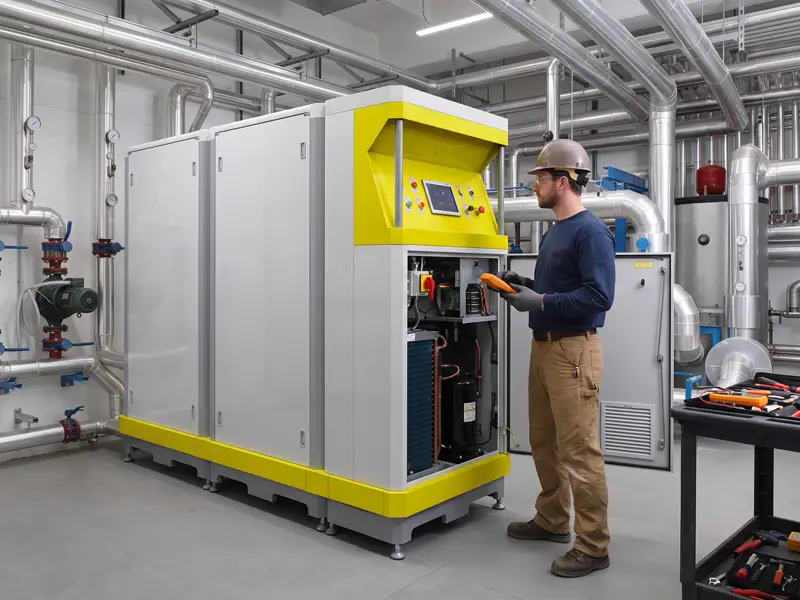 When Full Boiler Replacement Is the Right Call
At some point, continuing to repair or add upgrades to an aging boiler stops making economic sense. Replacement allows you to rethink capacity, redundancy, and technology from the ground up.
Clear Triggers for Replacement
- End-of-life condition of the vessel: Extensive corrosion, cracking, widespread tube damage, or repeated code inspection findings indicate that the vessel is no longer a reliable long-term asset.
- Chronic reliability and downtime issues: Frequent unplanned shutdowns, emergency callouts, and backup system activations are strong signals that the plant is no longer dependable.
- Runaway operating costs: Fuel, water, treatment, and repair costs keep rising faster than inflation, even with proper maintenance. A high-efficiency system can often deliver meaningful reductions in total cost of ownership.
- Major changes in demand or use: Building expansions, process changes, decarbonization goals, or partial electrification may have shifted load profiles significantly from the original design. A right-sized, modern plant can avoid both oversizing and chronic short-cycling.
- Inflexible emissions or permitting limits: Some older designs cannot reasonably be brought into compliance with current or anticipated emissions standards, especially in strict air quality regions.
What Replacement Makes Possible
- Higher baseline efficiency: Modern boilers and systems regularly achieve much higher thermal efficiencies than older units, especially with condensing and heat recovery technologies.
- Lower emissions and easier compliance: Low-NOx burners, advanced controls, and integrated monitoring make it easier to meet and document compliance with local and federal air rules.
- Right-sizing and redundancy: Multiple smaller units, modular systems, or hybrid solutions (e.g., pairing boilers with heat pumps) can better match part-load operation and provide backup capacity.
- Better integration and data: New systems are designed with connectivity in mind, making it easier to tie into BMS, analytics platforms, and corporate sustainability reporting.
Replacement requires more capital and planning but often delivers the strongest combination of reliability, efficiency, and compliance over the next 15-25 years.
Your Next Steps for Boiler Modernization
Choosing between repair, retrofit, or replacement is rarely a simple, easy call. It depends on your risk tolerance, sustainability goals, budget, and the actual condition of your equipment.
ATI Technical Services supports facilities through comprehensive condition assessments of boilers, burners, and controls, including combustion analysis and inspection findings. We develop repair vs. retrofit vs. replacement roadmaps that align with your capital planning and sustainability targets. Our maintenance and service contracts stabilize performance and provide trend data to inform future decisions.
For many facilities, the best place to start is with a structured evaluation of the system you already have. Contact ATI Technical Services for an objective assessment of your boiler plant’s best path forward.

Start Your Preventative Maintenance Plan Today!
Call us at 631-761-9268 or fill out the form, and one of our experts will get back to you shortly.